Hayao Miyazaki Shrine
A page honoring animation director Hayao Miyazaki's contributions to the community of anime fans obsessed with little girls.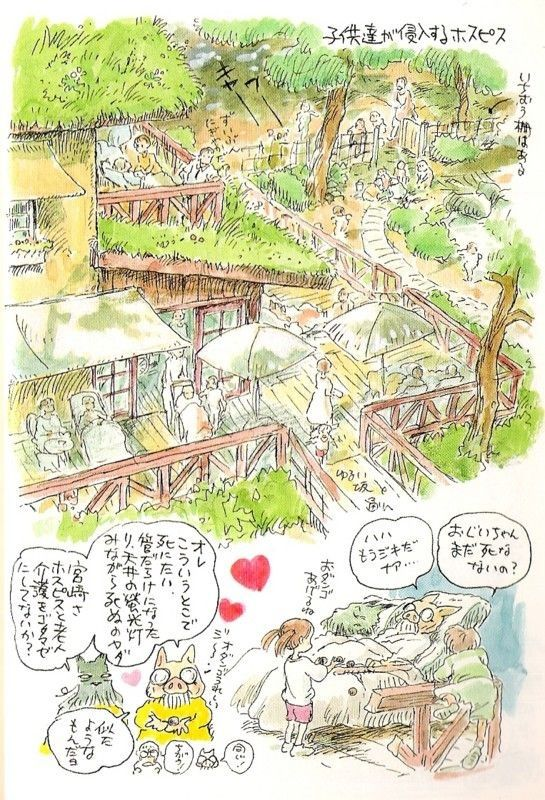
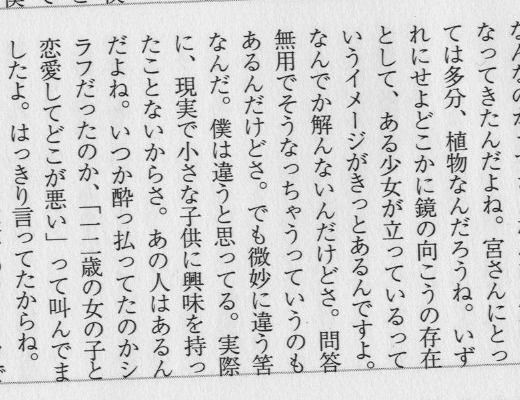
His statement originally originates from “The World of Hayao Miyazaki”, a 2004 publication from the Creators File series by Takeshobo. The book delves into Miyazaki’s creative process, exploring the themes and philosophies behind his films.
One section features an interview with Mamoru Oshii, the renowned filmmaker behind Ghost in the Shell (1995). Oshii recalls an instance where Miyazaki, in what he describes as either a drunken or uninhibited state, made the controversial remark.
“What’s wrong with falling in love with a 12-year-old girl?" (「一二歳の女の子と恋愛してどこが悪い」)
One of two fathers
Excerpts relating to Hayao Miyazaki from "From lolicon to moe: the adventures of the bishoujo". Please read the original article for their citations and full context. First, a quote about the first appearance of the word "lolicon", as directly associating with real life author Lewis Carroll.In the June 1974 issue of Bessatsu Margaret, in a work titled Stumbling Upon a Cabbage Patch […] which draws heavily from Alice in Wonderland, a male character describes Lewis Carroll as a man with a Lolita complex, or someone with the ‘strange character of liking only small children.’” [Galbraith 2019, p.28]Lewis Carroll's obsession with little girls is the subject of many controversies and arguments, either saying his attraction was innocent or that he was a closet pervert.
Then, Miyazaki's direct contribution to "moe" obsession with 2D characters in his version of Clarisse.
....However, during most of the 70’s, these fans were still a minority: the Comiket was mostly attended by women, while most male fandoms were oriented towards science-fiction. It is only around 1979 that things began to change and that lolicon became more mainstream, thanks to two artists: mangaka Hideo Azuma and director Hayao Miyazaki.Compare and contrast with Leon The Professional, a live action film popular among lolicon circles involving a older man protecting a young girl. In the film, "Mathilda looks up to Léon and quickly develops a crush on him, often telling him she loves him, but he does not reciprocate. "“Faced with the overwhelming presence of girls and women at the Comic Market, and the dominance of fanzines by and for girls and women focusing on sexual and romantic relationships between male characters, Azuma and his friends were opening space for boys and men. In fact, even as Azuma was responding to shoujo manga in his bishoujo manga, lolicon fanzines were responding to yaoi fanzines by and for girls and women. If imagined and created relations with, between, and through male characters provided girls and women with space to more flexibly play with gender and sexuality, Azuma and his friends raised the possibility of something similar for boys and men.” [p.33]
It is in this context that Hayao Miyazaki released his first feature-length movie: Lupin III, The Castle of Cagliostro. Under normal circumstances, this movie would have had nothing to do with shoujo and lolicon fans: the original manga was dark and macho, and even if the eroticism had been toned down in animated adaptations, it was clearly not made to appeal to shoujo sensibilities. But Miyazaki had his own vision of the franchise, especially of Lupin’s character: initially a brutal and violent criminal, he became a much nicer person, taking on the role of a “protective older brother” [Crawford 2020].
This new interpretation of the character was mostly made possible thanks to Lupin’s interaction with the movie’s original character: the young girl Clarisse. Rose Crawford explained in detail the originality and appeal of Clarisse’s character: “she was the stark opposite of Fujiko Mine, a major player in the Lupin III franchise, a classical femme fatale who carried all of Lupin’s wits and tricks herself. As well, while damsels existed in all genres of manga, especially children’s manga, none of them were as accessible nor as character-driven as Clarisse. She was in peril with high stakes around her survival. Castle of Cagliostro‘s audience was compelled to care for Clarisse and want to protect her […].” [Crawford 2020]
The movie caused (and still causes) many debates among Lupin fans for its disrespect to the original franchise and characters. But regardless of this, Clarisse appealed to the audiences and very quickly became an icon. Just months after the movie had come out, doujin such as Clarisse Magazine or Clarisse Symphony started to appear.
Azuma and Miyazaki’s works represent the two sides of the lolicon phenomenon, what I’d call the “dark” and the “bright” one. Azuma rooted it in doujin culture, but most importantly in erotism or pornography: it is no doubt from him that the long-enduring image of “children sexualization” comes from. On the other hand, Miyazaki’s approach is more comfortable and sympathetic: it is an attraction for girl characters based not on any eroticism, but on their absence from it. Clarisse is innocent and pure, and it is precisely what compels the viewer to like and want to protect her. The entanglement of those two sides would be the trigger of the “lolicon boom” and would definitely constitute lolicon not just as a fandom movement, but as an aesthetic of its own.
A major common point between Miyazaki’s and Azuma’s characters, besides the fan activity they triggered, is their very nature: the fact that they are beautiful young girls, ie bishoujo.
...This explains why magical girl shows which initially didn’t target the otaku market ended up hallmarked as flagships of lolicon: they were cute, and that was all that was needed. What mattered was not the content, but simply the character designs and appearances: they were childish and round, and therefore appealing. They were, basically, kawaii. Once it had been divorced from its shoujo manga origins, lolicon became just that: an otaku-inspired, sexualized take on cuteness.
Comparing and contrasting the words "bishoujo" and "loli" in otaku fandom:
From the comments of previous article:The word has never really implied a prepubescent girl. Even when Azuma Hideo defined Lolita Complex in Cybele, he defined a Lolita between the ages of 12~15 along with two other kinds of complexes that Lolita Complex would inevitably vacuum up. This understanding has remained mostly consistent through the 80s and 90s; you’ll see a Lolita character drawn by Uchiyama Aki and he’ll write in her profile that she’s 15; it’s why all the erotic games featuring uniformed girls were interchangeably called Bishoujo and Lolita games in Japan.Channer lingo mutating definitions of "lolita" in western spaces:I personally don’t know how westerners were introduced to the term through Japanese media, and how it has come to exclusively imply a prepubescent girl exclusively in their minds, but trying to investigate the western internet is much harder than the Japanese one. Taruby on April 17, 2021 at 9:24 pm
Have to respectfully disagree with you there Matteo, the term lolita does not imply prepubescent. Your article cites Clarisse as an example of bishoujo and Clarisse is clearly not prepubescent (she has breasts) and Lupin calls the Count a lolicon for wanting to marry her.In western spaces, the term "bishoujo" is probably most associated with "Bishōjo Senshi Sērā Mūn" aka " Pretty Guardian Sailor Moon[". And the series of Bishoujo statues inspired by the art of Shunya Yamashita. The characters depicted in the Bishoujo series are often genderswapped versions of existing characters, like a "lolita" version of Chucky the murderer doll wearing a short skirt and thigh high socks. Some other figures are humanized versions of girl characters, like various My Little Pony horses or Monster High turned into "lolitas", which means that the brands endorse this type of erotic gaze upon their children's cartoons and child characters. These figures have various bust sizes and body types, which relates back to the concept of "bishoujo" and "loli" characters as depictions of both pre-pubescent and pubescent young girls.Loli and Bishoujo were synonynms at the time, you see the same thing in 1982 with Urusei Yatsura – a teacher is described as suffering lolicom when he’s pining for Lum, a busty highschooler.
...
The idea that lolita or loli implies PREpubescent or PREteen girls (to the exclusion of mid-pubescent or teens) is basically a forced meme born in western 4chan around 2004 which we first see exhibited in Danbooru’s wiki in 2005.
The idea that 13 is “too old” to be a loli isn’t seen until 2014, and that’s only in the context of high-school boy characters saying what’s loli, which makes sense in respect to them since they are not middle-aged men. The only younger girls highschool boys have a significant age difference with is middle-schoolers, not fellow high-schoolers like Lum or Clarisse. tyciol on February 23, 2023 at 9:37 am
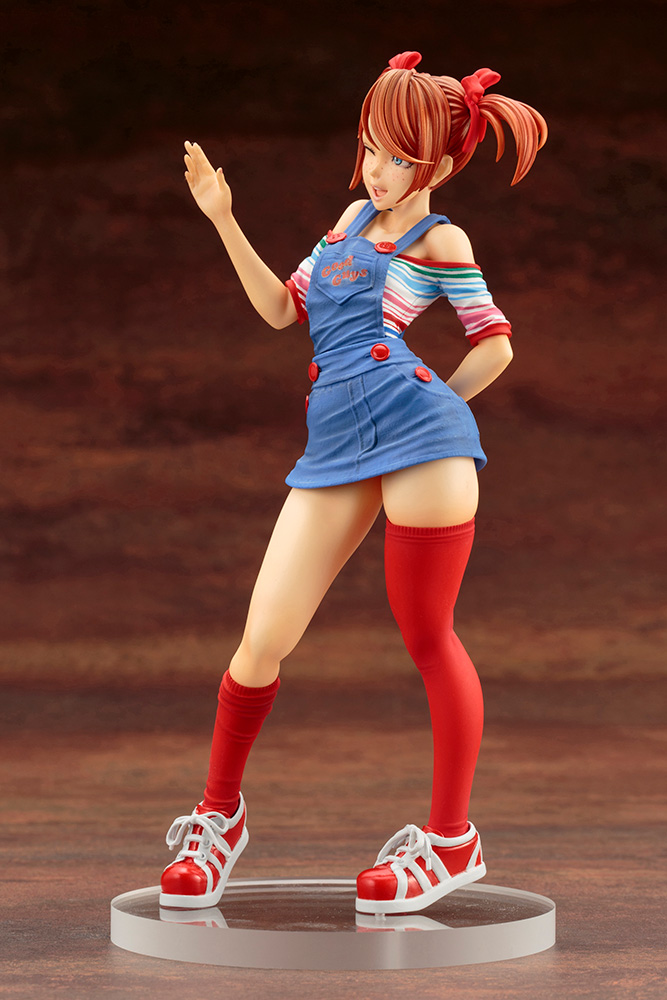
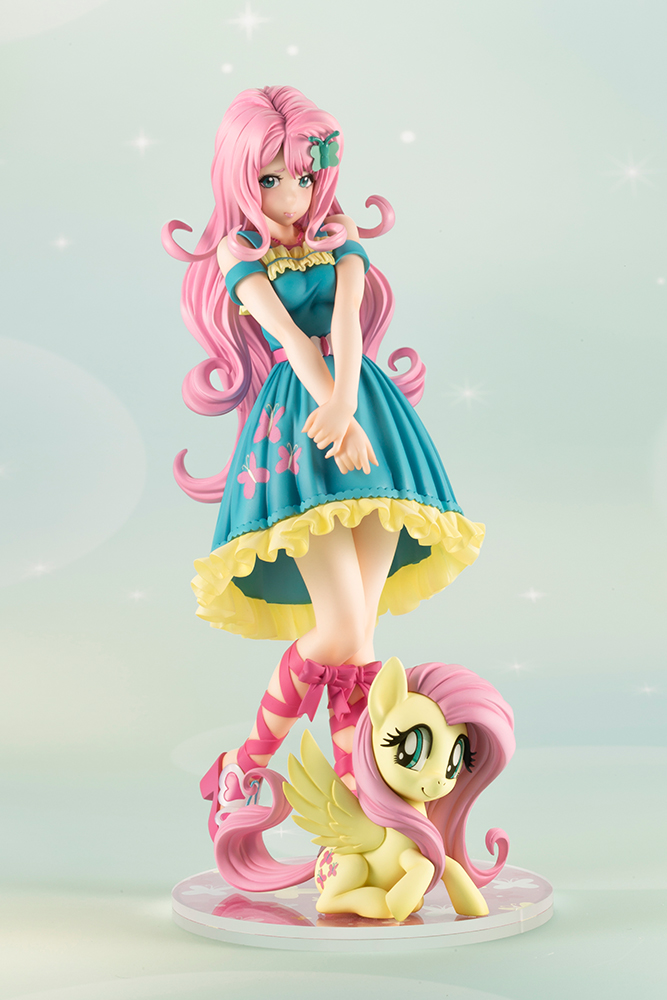
Bishoujo series figures are popular in many circles, including among young people who embrace the "pretty girl" as an aesthetic but reject the association with their definition of lolicons as "pedophiles". Perhaps this audience is more of the "shoujo" audience, in that they seem themselves in the young girls. And perhaps some other fans feel more of a kinship with Hayao Miyazaki's version of lolicon: an attraction to pretty young girls in which sex desire is not acted out, so the object of their affection remains innocent and pure.
Citations:
- “The World of Hayao Miyazaki”
- Japanese interview with Miyazaki
- From lolicon to moe: the adventures of the bishoujo